NASA's Moon Plan Runs Through Florida: Three Rockets, One Earth-Orbit Dress Rehearsal in 2027 and Landings in 2028
Artemis III will not land on the Moon. It will launch three of the largest rockets on Earth — all of them from Florida's Space Coast — and practice docking Orion with two rival landers a few hundred miles up, so that Artemis IV can attempt the landing in 2028.
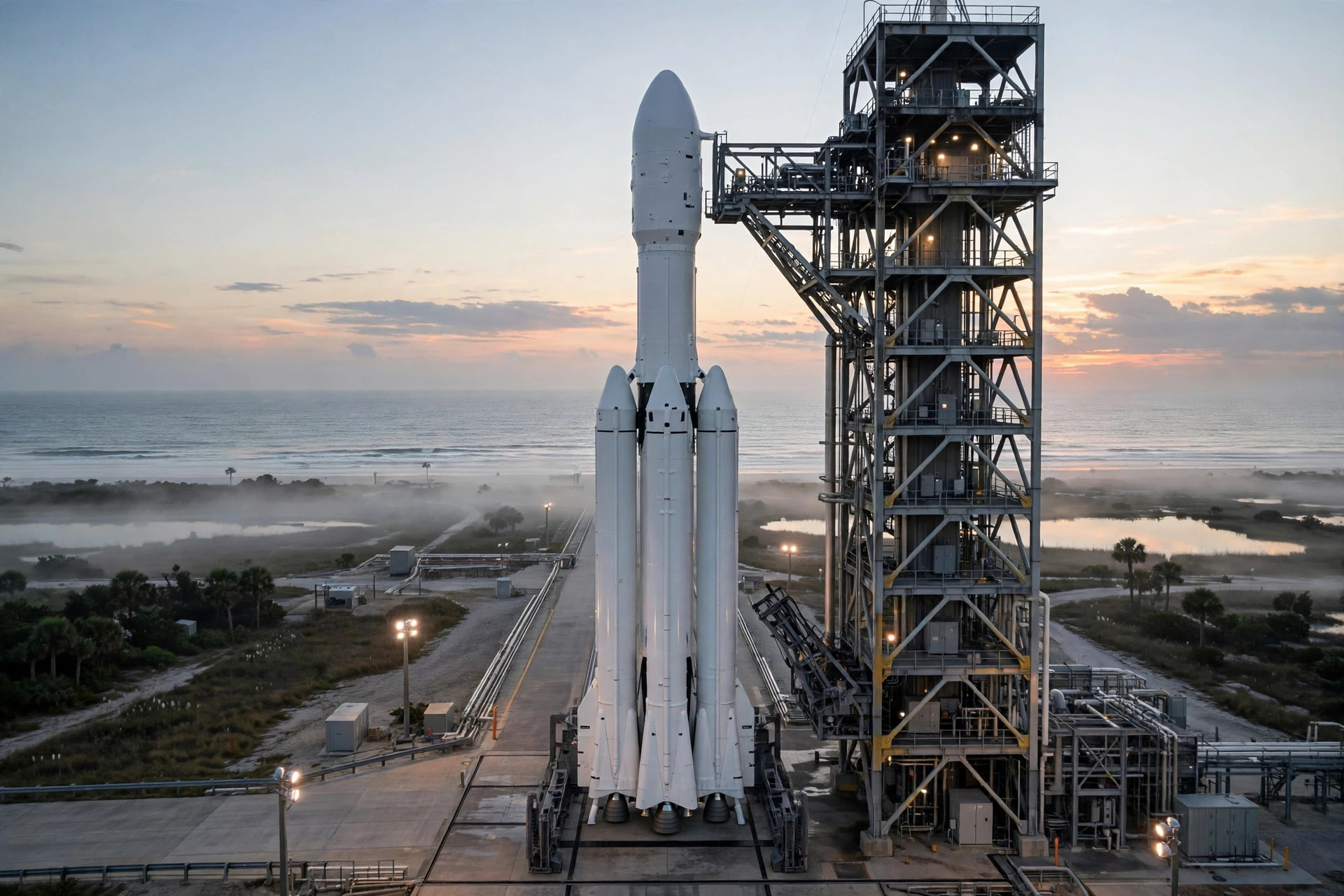
Every road back to the Moon now runs down Florida's east coast. In its Kennedy Space Center briefing on October 23, NASA laid out Artemis III as a roughly 14-day test mission in low-Earth orbit in 2027: three massive rockets — NASA's own Space Launch System, SpaceX's Starship and Blue Origin's New Glenn — all launching from the Space Coast, carrying a crewed Orion spacecraft and test versions of the two landers competing to carry astronauts to the surface. Artemis Program manager Jeremy Parsons called it likely the most complicated launch campaign ever undertaken, and Administrator Jared Isaacman reaffirmed the sequence: test in Earth orbit next year, land in 2028.

The choreography, as NASA described it, opens with Blue Origin: its New Glenn launches first, carrying the Blue Moon Mark 2 test lander, which can wait in orbit for up to 30 days. Orion then launches on the Space Launch System, docks with Blue Moon on Day 3 and spends two days docked while the crew goes aboard and runs tests. Starship launches on Day 6 for its own round of docking and undocking with Orion. The data from that single mission is meant to decide which lander flies Artemis IV — the first crewed lunar landing since the Apollo program ended in 1972, with a second landing mission, Artemis V, also planned for 2028.
The Space Coast's part in the plan is not ceremonial. The test campaign needs SpaceX to demonstrate transferring cryogenic propellant between Starships in orbit — expected in early 2027 — and an uncrewed Starship lunar landing attempt late in 2027, both launched from Florida pads, on top of the station work already flying from the Cape: the SpaceX CRS-35 Dragon that launched from Cape Canaveral on October 13 carried the roll-out solar arrays that station spacewalkers have now installed seven of, with the final installation set for November 5, according to this morning's AMSAT News Service bulletin. For Central Florida, the Artemis decade's critical path is quite literally overhead.